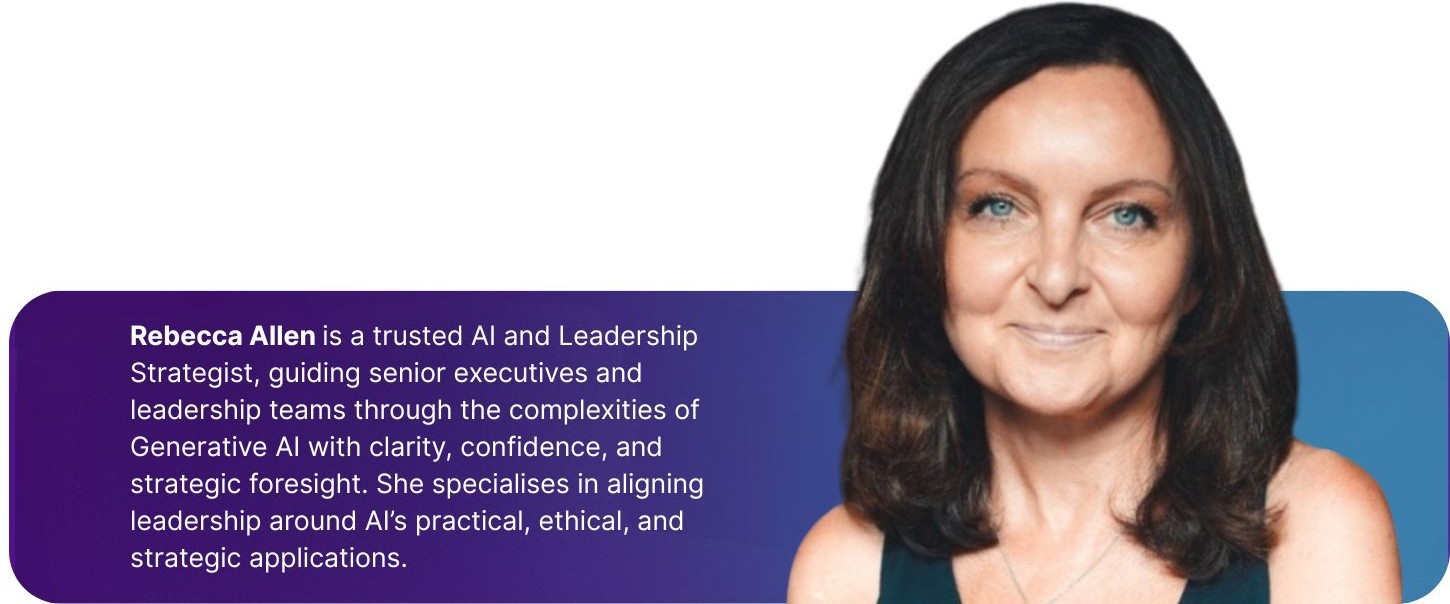
Authored by Rebecca Allen
The ‘AI bubble’ debate is seemingly everywhere right now.
Some people insist AI has peaked and the results aren’t living up to the noise. Others claim we’re still in the early tremors of something much larger. Meanwhile, a whole chorus of commentators are predicting an AI winter.
Leaders are hearing both narratives every day, and that is causing hesitation.
The trouble is, the bubble question doesn’t help anyone make better decisions. This moment feels confusing not because AI is hollow, but because change has arrived faster than most organizations can absorb it.
Why the bubble question is so loud right now
A few things have converged at once.
Capabilities have jumped quickly. Voice systems, deep search, agent workflows, custom assistants and compressed models have all arrived in a short window. Most teams are still in the middle of processing last year’s shifts when the next wave hits. People can’t absorb it fast enough, and that gap creates skepticism.
Market noise doesn’t help. Vendor pivots, licensing drama, compute shortages, lawsuits and regulatory debates all create the sense that the ground is unstable. People misread this as weakness in the technology rather than turbulence in the ecosystem.
And underneath it all, there’s fatigue. Leaders are genuinely tired. Many would love someone authoritative to say ‘relax, it was all hype’. The bubble narrative offers that permission.
Put together, it’s no wonder everyone is talking about it.
What is actually real inside organizations
If you tune out the headlines and look at how work is changing day to day, the picture is clearer.
AI is reducing the time teams spend on reporting, research, admin, document work and preparation. It is cutting backlog. It is improving the quality and speed of customer responses. It is taking cognitive load off people who have been stretched thin for years. It is helping people move from idea to draft in minutes.
None of this relies on any single model or vendor. It comes from a structural shift in the cost of turning information into action.
That’s the part that isn’t going anywhere.
Some tools will fade. The shift won’t.
Here’s what will happen: some products will lose relevance. Some features will get absorbed into larger platforms. Some tools won’t meet enterprise standards on privacy or governance. Teams will outgrow early experiments.
This isn’t disappearance. It’s consolidation.
We’ve seen the same pattern with cloud, mobile, collaboration software and cybersecurity. Leaders who misinterpret normal industry turbulence as evidence of a bubble risk clinging to processes built for a cost structure that no longer makes sense.
Yes, there will be losers. Some companies will fold. Prices might shift. Regulation will tighten in some regions. But none of that changes the fundamental equation: demand for faster, cheaper cognitive work is still building, and the organizations that know how to deliver it will have the advantage regardless of which vendors survive the shakeout.
And the scope is widening, not narrowing. Multimodal systems are moving beyond text. AI is now handling image analysis, video processing, voice transcription, code generation, data interpretation. The bubble debate often fixates on chatbots, but the actual capability expansion is happening across dozens of use cases that weren’t viable two years ago. That’s not hype cooling off. That’s a technology base broadening.
And here’s the part that matters: even if your current tools get replaced, you won’t be starting from scratch. Teams who’ve learned to identify which tasks AI can actually improve, how to write effective prompts, how to spot problems in outputs, how to build safe workflows will adapt to new tools in days, not months. The learning isn’t wasted. It transfers.
You’re not betting on a tool. You’re building organizational muscle that applies regardless of which platforms survive. That capability compounds. It doesn’t evaporate when a vendor changes direction or a new model arrives.
How leaders can invest without guessing the future
You don’t need to pick winners. You don’t need to predict which model dominates next year. You don’t even need to be certain where the technology goes next.
You need to invest in the parts of AI adoption that hold their value under any market scenario.
Anchor every AI project to a real workflow problem. Measure time saved, errors reduced and backlog cleared. Build organizational literacy so people use tools safely and confidently. Create simple guardrails that reduce risk without slowing progress. Redesign processes for a world where cognitive work is cheaper and faster than it used to be.
In other words, don’t invest in AI as a bet. Invest in the capability to use AI well.
A calmer way to close the debate
What matters is already visible in your own organization: the cost and speed of cognitive work have shifted, and the companies that build the capability to work with that shift will outperform those waiting for certainty.
You don’t have to dismiss the skeptics. You just need to stay curious, stay practical and keep building capability.
The organizations who do that won’t care whether this moment was a bubble. They’ll be outpacing competitors who waited for certainty.
The Gen AI Academy Experts Share Their Insights
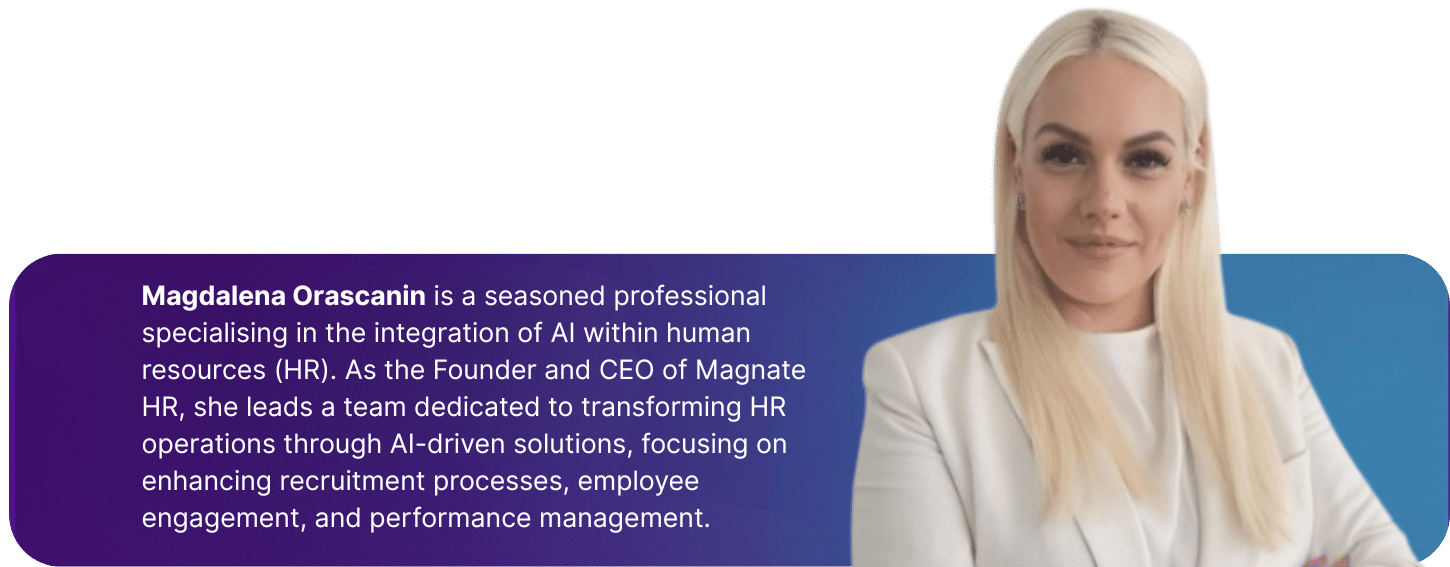
Magdalena Orascanin – AI For HR Professional
Most AI hesitation inside organizations has nothing to do with a “bubble.” It comes from something much simpler: people don’t know how to use the technology yet.
When employees aren’t trained, when HR isn’t guided, and when leaders don’t build the internal capability to work with AI, every tool feels risky, experimental, or overwhelming. That’s why adoption stalls.
The real differentiator isn’t the tool, it’s the people.
Organizations that invest in guided training, safe workflows, and day-to-day support see rapid adoption and real ROI. Those that don’t stay stuck in pilots forever. If leaders want AI to deliver value, they must stop debating hype cycles and start training their workforce to actually work with AI.
That capability compounds. The technology is secondary.
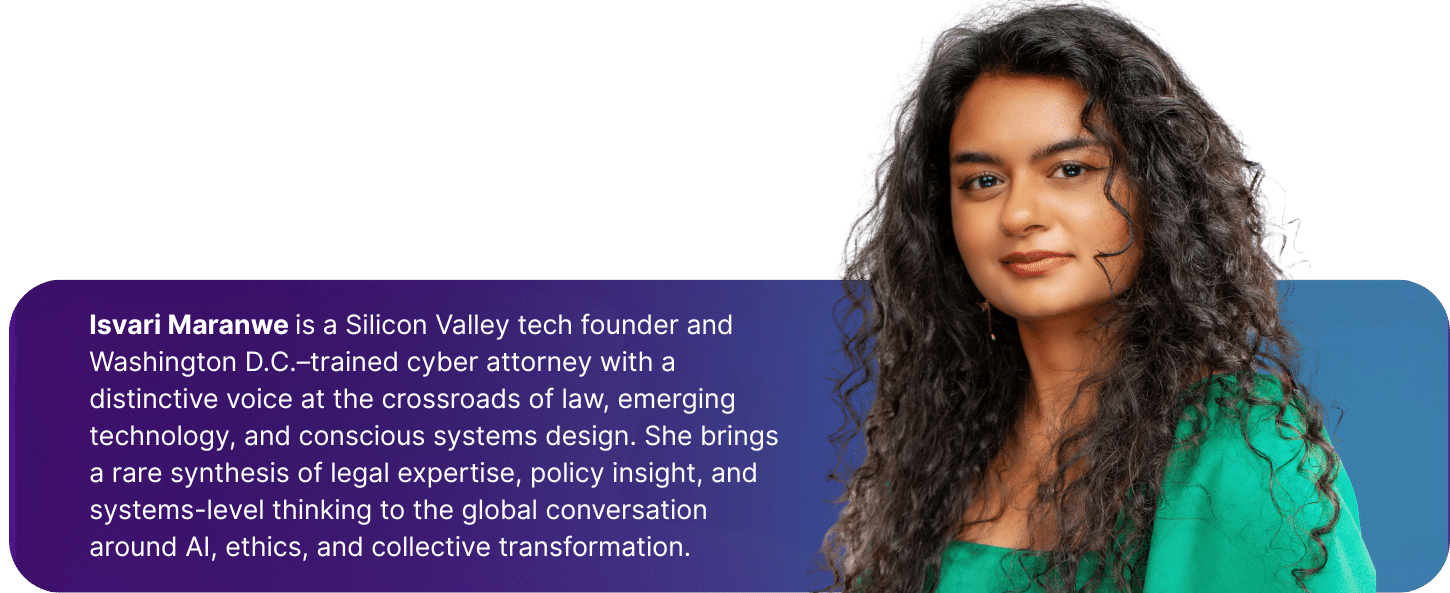
Isvari Maranwe – Conscious Tech Entrepreneur
AI is likely to impact the economy in ways that take it beyond the “bubble” conversation. It will likely change the way that economies work and even the concept of bubbles. For example, it has the potential to render large swaths of human jobs obsolete but not the need for the benefits of that work to be spread across society. I often think of AI’s impact on human beings as similar to the impact that cars had on horses.
The financial winners of the AI boom will be those who adapted to those changes early on without accelerating it.
In sum, ignore whether or not AI is a bubble and focus on the tangible ways you can ethically use it to power up your work and stay competitive in the current market. The safest way to take advantage of AI is to neither be behind the curve, nor pushing the front of the market, but rather solidly in the middle.
Further Reading
Productivity & Work Impact
McKinsey Global Institute (2023–2024) — The Economic Potential of Generative AI
Microsoft Work Trend Index 2024 — The State of AI at Work
Boston Consulting Group (BCG) 2024 AI Adoption Study — productivity and adoption barriers
Massachusetts Institute of Technology / Stanford University Graduate School of Business 2023 — Impact of AI on Customer Support Productivity
Enterprise Adoption Trends
IDC Futurescape 2024–2026 — enterprise GenAI forecasts
Gartner Hype Cycle for AI 2025
Skills Gaps & People Readiness
Deloitte Human Capital Trends 2024 — skills deficit as the top adoption blocker
PwC CEO Survey 2024 — reinvention urgency and tech readiness
Market Maturity & Consolidation
OECD – OCDE AI Policy Observatory — regulatory trajectory & market signals
Stanford AI Index 2024 — investment flow, research output, model performance
Courses:
AI‑Accelerated Strategic Planning – Dr Eric Zackrison Ph. D.
Building Psychological Resilience In The Age Of AI – Anastasia Volkova
Critical Thinking For The AI Era – Dr Eric Zackrison Ph. D.
Human Skills For The Age Of AI – Dave Birss
Leadership Beyond the Algorithm – Dr Lollie Mancey
Mastering Responsible AI – Toju Duke
Strategic AI for Team Leaders & Decision-Makers – Dr Shama Rahman
Workshops:
AI Adoption For Leaders – Karrie Sullivan
AI Alignment for Leadership – Rebecca Allen
AI Clarity For The Boardroom – Mike Weston
AI Ethics In Practice: From Foundations To Critical Futures – Asma Derja
AI Literacy For Human Centred Leadership – Alex Searle