Want your blog to show up in ChatGPT or Google AI Overviews? AI search optimization helps your content get cited by giving direct answers and proof readers can trust.
Let the most important come first. When people ask a question in ChatGPT, Perplexity, Claude, Gemini or any other AI-powered search engine, your content needs to be structured so the model can easily lift the answer and trust it. This means putting the core idea upfront, using clear language, strong formatting, evidence that can be cited, and visible signals of authority.
What Is AI Search Optimization?
AI search optimization (AEO) is the practice of structuring your content so AI models can easily use it. That means giving clear answers that stand on their own, laying out steps in a simple way, and showing authority through examples and proof so your content is quotable.
What AI Search Optimization Covers:
- Google AI Overviews – the AI-generated summaries inside Google search results.
- ChatGPT Search & Custom GPTs – how your content is cited or quoted in LLM answers.
- Perplexity AI – an AI-native search engine that always cites its sources.
- Gemini (Google) – integrated across Google products and search.
- Microsoft Copilot / Bing Chat – AI answers built into Bing and Microsoft tools.


Where Optimizing for AI Search and SEO Overlap?
Both traditional search engine optimization and AI-driven search reward content that is accurate, authoritative, structured, and genuinely helpful. In both systems, topical depth, credibility signals, clear formatting, and original insights increase the chances of being selected, whether that means ranking high in search results or being quoted inside AI-generated responses.
High-quality content that earns links, mentions, and consistent presence across reputable sites tends to perform well in both environments. Likewise, optimizing for clarity, scannability, and factual sourcing helps both search engines and large language models (LLMs) parse and trust the information. In both systems, the same principle wins: content that clearly delivers the best answer rises to the top.
However, while SEO optimization and AI search optimization are complementary, there are real differences worth calling out. Learn how these differences change brand visibility in the AI-search era.
How AI-Search Optimisation is Different: Four Key Shifts
Traditional SEO is about getting your page to appear in results and earn the click. With AI-driven search, the goal shifts: you want to be the source an AI model uses inside its answer. The need for credibility stays the same, but the way you get “seen” changes. Here’s how:
- Backlinks vs. AI Citations
Backlinks matter in Google rankings, but AI search cares just as much about brand mentions across reputable, relevant sites. If trusted third-party sources names you, the AI is more likely to use your content as a reference inside its response.
An Ahrefs study of 75,000 brands found that brand mentions correlate more strongly with AI visibility than backlink volume alone. In other words, being talked about matters as much as being linked.
- On-Site Content vs. User-Generated Content
Traditional SEO focuses on optimizing your own pages. But in AI-powered search engines, visibility also depends on how much your brand or subject is discussed on third-party platforms, especially user generated content channels like Reddit, Quora, niche forums, Slack groups, or product review sites. These conversations influence what an AI sees as credible. A single Reddit thread or G2 review can outrank your polished blog post inside an AI answer. If people are discussing your product, problem, or category “in the wild,” that now shapes your visibility.
- Structured Data and Content Formatting for Machines
For AI search, structure is mission-critical. Models use natural language processing to extract answers, so they must understand your content instantly. They need to grab a sentence or two without guessing. Clear definitions, short paragraphs, bullet lists, step-by-step explanations, and cited facts make your content easy to quote and reduce ambiguity. The simpler your formatting, the more machine-friendly your content becomes.
- Freshness and Recency of Content
Google rewards freshness in some cases, but LLMs practically expect it. AI models avoid outdated claims because they risk returning inaccurate answers. Even small updates, new statistics, revised explanations, or a visible “Last updated” label, make your article more attractive to AI search. In fast-changing niches, old content doesn’t just fall behind; it becomes invisible.
What Kinds of Content do LLMs Prefer to Cite?
LLMs tend to cite content that gives a direct, standalone answer. Short definitions, clear explanations, and sections that begin with a complete statement are easiest for AI systems to lift, because they don’t require context. When someone asks a search query, the AI looks for a sentence that already sounds like an answer.
Your company blog isn’t dead in AI-driven search. An Ahrefs study shows that blogs, guides, and comparison content (articles that rank tools, compare solutions, or explain differences) earn the highest share of AI visibility. These formats lend themselves to precise, citation-ready statements that AI can quote directly.

Step-by-Step: How to Optimize a Blog Post for AI Search
You can optimize blog posts for AI search by structuring some sections as direct Q&As, giving answers AI can lift without extra context, and adding signals that make your content quotable and trustworthy. Here’s the step-by-step process:
1. Write a snippet-ready intro
Start your article with a 40–60 word paragraph that directly answers the main question in plain language. This is what AI tools are most likely to lift.
Hint: Write it as if someone asked you the question out loud — give the answer in one clear sentence before you explain further.
2. Use question-based headings
Phrase some H2s and H3s as natural queries — for example, “How do you optimize a blog for AI search?” instead of “Blog optimization tips.”
Hint: Look at how people type questions into Google, ChatGPT, or Perplexity, then mirror that language in your headings.
3. Give direct answers upfront
For your key sections, start with a short, complete answer right under the heading. Then expand with more detail.
Hint: Imagine an AI pulling just the first two sentences. Would it still make sense on its own? If not, tighten it up.
4. Make sections standalone
AI search often extracts chunks of text. Each important section — like definitions, FAQs, or steps — should make sense even if a reader never sees the rest of the page.
5. Break down steps clearly
When explaining a process, use bullets or numbered steps, not long paragraphs. Think recipe-style instructions: short, clear, easy to scan.
6. Expand with detail and examples
Once you’ve given the direct answer, support it with stats, quotes, or short case studies. This makes your content quotable and credible.
Hint: Use ChatGPT’s deep research to surface stats and reports — but always double-check the original sources before using numbers.
7. Add an FAQ section & FAQ schema
An FAQ section is one of the easiest ways to boost your chances of being featured in AI answers. Add 5–8 short Q&A pairs at the end of your article. Each question should reflect what people naturally ask, and each answer should be clear enough to stand alone.
Examples of good FAQ questions:
- What is AI search optimization?
- How is AEO different from SEO?
- Do I need coding skills to add schema?
What’s FAQ schema?
It’s a bit of structured code that tells search engines and AI assistants, “This is a list of questions and answers.” With WordPress plugins like Rank Math or Yoast, you don’t need to code anything — you can add FAQ blocks directly in the editor, and the plugin generates the schema automatically.
If your CMS doesn’t support this, you can ask ChatGPT to generate the FAQ schema code (JSON-LD) for your questions and then paste it manually into your site’s header or body.
Why it matters: FAQ schema makes it much more likely that your answers will be pulled into Google AI Overviews, Perplexity responses, or even cited in ChatGPT outputs.
8. Use HowTo schema for processes
If your article explains a process (like this one), add HowTo schema. This signals to AI systems that the content is step-by-step instructions. Follow the instructions above on how to do it.
9. Cross-link to related guides
Add links to your other posts on similar topics. This builds topical authority and keeps readers exploring your site.
10. Align your metadata
Write a meta description that mirrors your snippet intro — short, clear, and aligned with the main question your article answers.
11. Test your schema
After adding FAQ or HowTo schema, run your page through Google’s Rich Results Test. It checks if your structured data is valid and visible.
Hint: This quick step can make the difference between your content showing up in AI results or not.
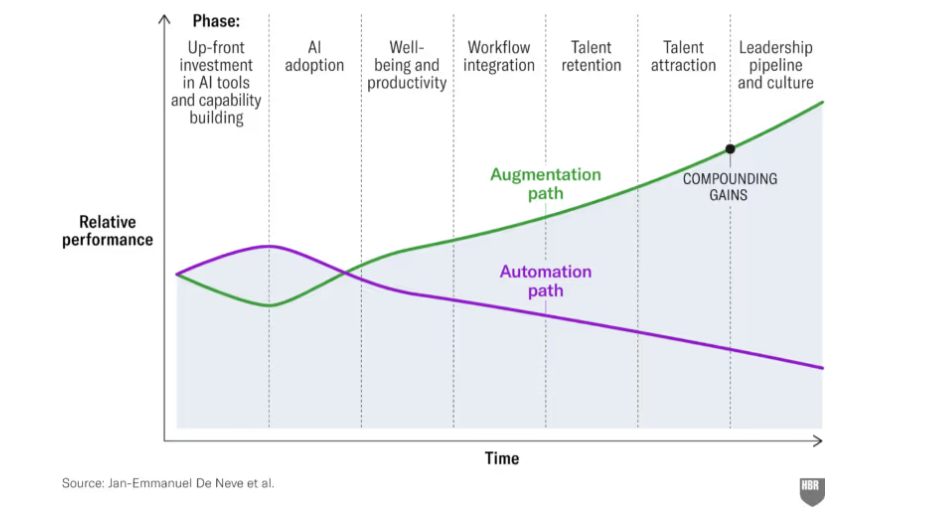
Here’s an excellent visual illustration by Emilia Möller.

Free Assessment Tools
If you want to check a blog post’s readiness, you can use a free custom GPT called “Blog Post AI Search Optimizeer” built around these principles. The idea: paste your draft, it scores you across those 15 criteria (snippet intro, question headings, stats, schema) and flags the biggest fixes.
Using a tool like this is a good way to move from “we might optimise for AI” to “we are optimising for AI visibility and citations.”
Final Words: The Bigger Picture
Optimizing a single blog post is one step, but AI-driven search changes how brands need to show up overall. When someone asks an AI assistant, “Which source covers this best?”, the answer should be your brand. That requires consistent topical coverage, evidence-backed writing, citation-worthy formatting, and recognition across third-party platforms, not just clicks on your website.
If your site becomes the trusted place to learn about a subject, you’re not just winning traffic, you’re winning credibility inside AI-powered search engines. So when you update or write a blog post, don’t just think: “How do I rank on Google?” Think: “How do I get quoted?”
Put the answer upfront. Back it with proof. Format it so each section stands alone. Do this consistently, and you increase your chances of becoming the voice AI systems repeat.
FAQ: AI Search Optimization
1. What is AI search optimization?
AI search optimization (AEO) is the practice of writing and structuring your content so AI assistants like ChatGPT, Perplexity, and Google’s AI Overviews can easily find, lift, and quote it.
2. How is AI search different from traditional SEO?
Traditional SEO focused on keywords, backlinks, and keeping readers on the page. AI search looks for clear, direct answers it can extract instantly. Both matter, but AEO adapts SEO for AI-driven search tools.
3. Do I need to change all my blog posts for AI search?
Not necessarily. Start with your most important or highest-traffic articles. Update them with snippet-ready intros, question-based headings, and statistics. Then gradually apply the same principles across your content library.
4. What kind of content works best for AI search?
Articles that answer specific questions directly, include clear steps or processes, and back up claims with stats or examples perform best. FAQs, how-to guides, and explainer posts are especially effective.
5. Can AI search optimization improve my Google rankings too?
Yes. While AEO is designed for AI assistants, many of the same practices—like clarity, structure, and authority—also strengthen traditional SEO performance.
6. How can I tell if my blog is optimized for AI search?
Check whether your posts include snippet-ready intros, question-based headings, and stats. To make it easier, you can also use our free AI Search Readiness Checker GPT to score your article and get improvement tips.
Originally posted Explore AI Search Optimization for Blog Articles